-----------------------------------------------------------------------
As well as the posts on this blog, check out the more frequently updated @GenSyn Twitter stream, and the #Synod stream below right:
-----------------------------------------------------------------------
Showing posts with label Church of England. Show all posts

Thursday, 4 July 2013

It's Back!

So here we are then. Another July Synod at York - and guess what's on the Agenda...

You can get the Agenda, papers and so on here and as always you can follow the excitement on the live stream (I'll post the link here when I have it). For the full muted TV and Test Match Special experience you can also follow the fun and games on Twitter. Our old account @GenSyn has now become the official Church of England feed. Our more subjective one can be found at @Synodical and don't forget to search for the #synod hashtag.

Sadly, Alastair has had to give up his Synod seat on his elevation to the Archdiaconate, so for the time being it's just me running the show. Contributions from others would be very welcome indeed - contact me via @Synodical if you are interested.

Justin
(Chichester 289)

Thursday, 15 November 2012

November's Synod

So, the General Synod is meeting for an additional session on the 19, 20, 21 November 2012.


Papers for the session are available here. - It's not all about women bishops.


Archbishop Rowan Williams has a number of contributed videos under the title Enough Waiting on the Archbishop of Canterbury's site. Both Archbishop Rowan, and Bishop Justin Welby (Archbishop designate) have spoken of strongly supporting the current measure as the best way forward to support women bishops, whilst giving the strongest level of support for those who cannot in all conscience accept women bishops.

There is a video entitled Not Enough Waiting representing a traditionalist view featuring Bishop Lindsay Urwin, from Walsingham.

A pro-women bishops lobbying site has been set up under the banner Yes 2 Women Bishops.

The A Fair Measure For All site collects a number of traditionalist/conservative articles and links; as does Together Forward.

The main debate on women bishops takes place on Tues 20 November.

Please pray for all listening and participating in Synod's debates; and for those who will be most dissapointed - whatever the result of the voting is.

Alastair Cutting (Chichester 96)

Saturday, 9 July 2011

Archbishop Rowan Williams’ presidential address

The text for Archbishop Rowan’s presidential address is on the Lambeth Palace website.

Two weeks ago in Eastern Congo, listening to the experiences of young men and women who had been forced into service with the militias in the civil wars, forced therefore into atrocities done and suffered that don’t bear thinking about, I discovered all over again why the Church mattered. One after another, they kept saying, ‘The Church didn’t abandon us.’ Members of the Church went into the forests to look for them, risked their lives in making contacts, risked their reputations by bringing them back and working to reintegrate them into local communities.
Read more here...
Alastair Cutting, Chichester 96

Friday, 8 July 2011

A Boring Agenda?

There has been some criticism so far - especially in the debate on the Agenda this afternoon - about the fact that our agenda in York this year looks rather dull. Certainly, there is a lack of big splashy topical debates, but despite the fact that it's what gets the coverage, the politics and problems of the day are not really what Synod is about. Its function is primarily a legal one, and there is plenty of that sort of stuff on the agenda. Also on the agenda - and seemingly missed by many - are two examples of another of the less glamorous jobs that Synod does, namely talking about and regulating the way in which we relate to other churches. If you look here and here, you will find documents that describe the current situation with regards to the Anglican Methodist Covenant, and which will inform a debate on Sunday afternoon. While we are still a way from unity, and while the process is moving at what seems to be a snail's pace, there is some progress happening. One piece of good news in a corner of the agenda.

In a similar vein, but perhaps of more importance, are the documents here and here, which will form the basis of a debate on Monday evening about relations with the United Reformed Church. The URC has its ultimate origins in the expulsion from the Church of England of Nonconformist dissenters following the Act of Uniformity in 1662, and if the recommendations in the report are passed by Synod, they will result in the request that "representatives of the two churches should join together in an act of worship in 2012, that would mark both the 350th anniversary of the Great Ejection of nonconforming ministers following the Act of Uniformity 1662 and the 40th anniversary of the inauguration of the United Reformed Church. The service should contain an expression of penitence for our part in perpetuating the divisions of the past, a desire for the healing of memories and an act of commitment to work more closely together in the future." That strikes me as being at least as important a thing for Synod to be doing as the various things that people this afternoon said we ought to be talking about. Apart from anything else - this thing might actually make a difference...

Justin
(Chichester 289)

Saturday, 28 May 2011

Outline Agenda for July Synod

So - here we go again. The Outline Agenda for the July Synod is now available from the Church of England website. There is some interesting stuff here, although the irredeemably cynical bit of me wonders how we will cope with yet another Synod without either sexuality or women in the episcopate...

Although there is not yet any associated paperwork, it is possible to pick out some themes in the agenda, and a few points where we could be in for some robust debate. The Methodist Covenant is back on the agenda, as is an item entitled "Conversations with the United Reformed Church". For the observer of Synodical process there is the amusing prospect of Synod being asked once again to confirm the appointment of the Chair of the Business Committee. Personally, I think that one might have been left to ride for a while, but we shall see.

There are several worthy-looking reports - the substance of which will be revealed in due course. The Church and Education features here, Presence and Engagement is back on the agenda, and there is a report from the Committee for Minority Ethnic Anglican Concerns.

At the moment, however, it is the Diocesan Synod motions that look the most interesting. Bradford have one on admission of baptised but unconfirmed adults to Communion, which will no doubt spark some lively debate. London, however, have my pick of the pops, calling for "a thorough review of how the House of Laity of this Synod and the houses of laity of diocesan synods are elected, particular consideration being given to whether the electorate should be some body of persons other than the lay members of deanery synods." I very much hope that they get what they want - this is one turkey who will happily vote for Christmas if it means that the Laity elected to Synod will be more representative and elected in a fashion that actually gives the people in the pews a voice.

Justin
(Chichester 289)

Tuesday, 8 February 2011

Möbius Strips - Synod in One Dimension

The synchronicity of a conversation in the parish last week and an aside in the Archbishop of Canterbury's sermon at the start of Tuesday's synod business both included comments on Möbius strips.


Image from WikiCommons

There is something curious about the Möbius strip is that it only has one side and one edge. Try following the side/edge with your finger...

Some might (cruelly) suggest it is quite an apt metaphor for the General Synod - one dimensional. But I think that misses a myriad of aspects hidden by such one-liners.

Today, synod had a presentation on The Wedding Project - it just demonstrated how not only can synod do stuff well (it was superbly presented, with two presenters, photos, videos, vox pop clips, laughs, a few 'ouch' moments), but also covers material that is as important to people outside church doors, as inside them. "England wants more Vicars" was a notable quote.

It may have only one edge, or side, but of course a Möbius strip is actually a very tactile and three dimensional object. Synod sometimes surprises us like that too; something of the mysterious, three-dimensional nature of God works his way into even the synodical processes. If someone tries to tell you the synod and it's work is shallow and pointless - one dimensional - then remember the Möbius strip.

Alastair Cutting Chichester 96


Monday, 7 February 2011

Synod Papers & Live audio feed

General Synod agendas and papers are here;
and there is also a live audio feed via Premier accessible here.

Alastair Cutting Chichester 96

So, what IS on Synod's agenda?

Here is synod meeting again in London. The November 2010 session was the usual, brief, inauguration session at the start of a new synod. Once we get to the February session, that's when the real work gets going.

Or does it? People have been commenting already that the agenda for this session seems thin. Although the whole week was set aside initially, the synod is actually only meeting from Monday until Wednesday evening. This is a quick glance as to why it might appear reduced; and what some of the more significant items are actually still are. Papers, as usual are available on the General Synod pages of the all new Church of England website (which is apparently no longer a sub-domain of the anglican.org - probably worth a blog post in it's own right at some point...).

Firstly, as it is a new synod, not all new posts have been fixed. Synod business is organised by the Business Committee - but that is only just in the process of being elected for the quinquennium. Many other important boards and councils have changed membership too, and this has affected pulling together some of the preparations for this synod.

Secondly, synod has sent out to the dioceses for debate 2 major pieces of work - Women Bishops, and the Anglican Communion Covenant. As we await these items to come back to synod for the final stages of the legislation, synod gets a chance to catch it's breath.

Monday's business starts with a presentation by The Right Honourable Andrew Mitchell MP, Secretary of State for International Development. It is a number of years since synod was addressed by a member of the government - and a great department for us to be hearing from. The press were asking before Andrew Mitchell's speech for a copy of what he was going to say. They couldn't have one, as he stood to speak passionately, with only the sparsest of notes, of recent visits to East Africa, and seeing the vital work being done by faith communities and others on the ground.

Other key items coming up include the the debate on the way ahead for the next quinquennium; as well as the motion asking for initiation - baptism etc - liturgies that are more in language that those unfamiliar with church jargon can better grasp. Not to dumb down our theology, but to make it more accessible. More later...

Alastair Cutting Chichester 96

Tuesday, 30 November 2010

Reformation of Synod?

@TheChurchMouse asked me to do a guest post for the inauguration of the new General Synod, and it was published a couple of hours before the inauguration service in Westminster Abbey.

Dame Mary Tanner: photo by David Michael Morris

However, as Dame Mary Tanner started preaching, I started to wonder if she had been looking over my shoulder (and - should she have even noticed my post - she may have wondered if I had got hold of an illicit copy of her sermon script in advance - full copy legitimately available here now). Have a look...

She started by highlighting what an inspired solution Synodical government has been:
Synodical government was a visionary initiative. It established definitively the voice of the laity in the governance of our Church, providing a place where laity and clergy, together with the bishops, meet to discern, to express consensus and to legislate.

She then went on to recognise that synod itself is now in need of reformation:
we know that our synodical system is – and probably always will be, like the institution of the Church itself – in need of reform and renewal. English parliamentary processes can have a negative effect, tending to polarisation, parties divided against one another, a culture of winners and losers. Thank goodness the call to the Synod – ‘decide’ – now replaces the former absurd practice of a bewigged lawyer crying ‘divide’ – just when the Synod was testing for consensus, testing for the mind of Christ.

- It was almost word-for-word what I had also written. I was encouraged to think that she, and others, share some of the thoughts I have been thinking too. And you cannot get more up-front than the sermon at the inauguration of Synod.

Mary Tanner starts by looking at the Jerusalem Council as her prime Biblical model for inspiration. It led her on - amongst many other things, to suggest:
Synod structures and procedures may need reforming. But perhaps what is most needed is for each of us to look at ourselves. We need to get hold at a deeper level of how costly listening can be. It is by listening with creative imaginations, not afraid of silence, that we form a space in which the Holy Spirit can lead us beyond polarisation to the place where we know that we need one another...

Towards the end of her sermon, Dame Mary said:
The most important thing you do is not the production of Measures, Acts of Synod, or Codes of Practice, important as these are, but the gathering together around the Lord’s Table to receive food for the synodical journeying.
Strive always to listen to one another with charity and generosity, and listen deep in the silence to the one who walks with you on the way, so that you too may say, like those at the Council of Jerusalem, ‘It seemed good to the Holy Spirit and to us’.

So, there is Mary Tanner’s challenge to this 9th General Synod. In his introductory welcome to the Queen, and just before she also spoke to Synod, ++Rowan Williams observed that this was the first Synod that there were no longer any remaining members of the earlier Church Assembly present. Except for her majesty, that is - who has seen Synods, and Archbishops of Canterbury come, and go. The Queen’s speech also included words helping Synod look forward:
The opening of a new Synod is a moment when we can all give thanks for the witness of those who have gone before, and pray for wisdom as you seek to balance change and continuity in the decisions that lie ahead of you.  ...
The new Synod will have many issues to resolve to ensure that the Church of England remains equipped for the effective pursuit of its mission and ministry. Some will, no doubt, involve difficult, even painful, choices. But Christian history suggests that times of growth and spiritual vigour have often coincided with periods of challenge and testing.  What matters is holding firmly to the need to communicate the gospel with joy and conviction in our society.

I have already outlined some of the areas and ways I think we could see Synod start to move - I am hoping to see some of these begin to take shape, so that we may all the better fulfil the role that the Queen has reminded us is the calling of Synod.

Alastair Cutting 96 Chichester

Tuesday, 23 November 2010

Dramas at Synod

Arriving as a newbie at Synod can be quite frightening. So many people, procedures; standing orders, and members standing to contend with.

As part of the induction for new members, a dramatised and light-hearted example of a synod debate, with full commentary, helped members to understand synodical processes. When I first joined synod 5 years ago, I found a similar presentation very helpful, and many new members I have spoken to found this one similarly so.


Actually, it was such a useful case-study in debating procedure, that I managed to procure a copy of the script, and the permission to publish it. It may well be an aid to Diocesan Synod members too, especially the Chairs of House of Laity and Clergy.


Here are a couple of snippets:

Margery Kempe: Margery Kempe, Norwich, 1438. Mr. Chair, I am delighted to move this motion in my name. The Joint Ecumenical commission for motherhood and apple pie has spent the last two years considering both motherhood and apple pie from a variety of angles, as detailed in GS 1592…

Narrator: You will have noticed that she correctly started her speech by addressing the Chair. All speeches should be addressed to the Chair: only the person in the Chair addresses the Synod directly. After the opening speech the debate will be opened up to members... [etc.]

....

Narrator: Let’s hear how the first speaker gets on.

Hilda of Whitby: Hilda of Whitby, Religious Communities, 680. There are two points I want to make. First, in GS 1592 paragraph 23…

Narrator: Now this is good start – short, sharp, focused and directly to the point.

HW: … I could say more, but as the amber light has come on, I would say in conclusion that my main points are these … [etc.]


Other participants include (!):
Thomas Aquinas, Julian of Norwich, Catherine Parr, Hieronymous Bosch & Richard Hooker


Download the full sketch here, or continue reading it below the fold:


Alastair Cutting 96 Chichester


Is Synod Fit For Purpose?

The Church Mouse invited me to write a guest post on his famous blog, and you can find it here: http://j.mp/ChMouse.

Mouse starts:
Synod reform: Guest Post from Synod Member Alastair Cutting

There are some who feel, and I am amongst them, that doing church business in this way may not be the best. The General Synod has served well since its introduction in the 1970s, but is it fit for purpose now?

On the inauguration of the new Synod, Mouse is delighted to kick off a conversation about how General Synod could be reformed with a guest post from General Synod number 96, Alastair Cutting.

Read more here.

Alastair Cutting 96 Chichester

Friday, 15 October 2010

The New General Synod

So, all across the country, excited new members of General Synod have been elected all this week! (Well, I guess the fact that you are reading this blog makes you & me the sort of people that probably consider synod elections exciting...) The official list is here; Peter Owen's helpful unofficial one is here.

So what happens next? Well, each diocese will be returning to Church House Westminster the official results from the elections.

New members will need the dates of General Synod meetings - but just so you have the immediate ones:

22 - 24 November for the Inauguration of new Synod in London, starting with a service in Westminster Abbey in the presence of the Supreme Governor, the Queen, who will then address the new synod back in the chamber at Church House immediately afterwards.


Synod then also meets in London again from the 7-11 of February; and in York 8-12 July, based in the university in York.

One of the other things new blog-savvy members of synod will of course want to do is to have the facility to contribute to this Synod Blog. Any member sending an email to synod@mac.com with 'Add to Synod blog' in the subject line will be included as a blog author.

And if you didn't get elected to synod, sorry - but at least you can celebrate with all the time you have saved. Dave Walker has a Press Release that you may also be able to use:


Alastair Cutting (Chichester Diocese)

Sunday, 10 October 2010

General Synod results are (coming) in

So, the polling stations for General Synod are closed (actually, it was a postal vote, but Friday 8 October was the last day for votes to arrive).

Election counting - credit link Reuters
Counting takes place this week; different diocese are holding counts on different days - Liverpool on Monday 11 October I gather, Chichester on Thursday 14.

In fact, some results are in already, the Channel Islands for example, and some in Chester. The definitive independent resource for membership lists etc comes from Peter Owen's page of Synod members. Expect to see the empty boxes on his grid populated with new members over coming days. (To help Peter keep his list up-to-date, please email him results here.) Peter also feeds a lot of synod data into the Thinking Anglican's posts related to General Synod.

What will be hard to discern at this stage, I suspect, is how the new synod will be likely to vote on key upcoming votes - like the annual parochial fees?? Only kidding...

Alastair Cutting

Friday, 10 September 2010

Voting for General Synod, or General Custard

So, the date for confirmation of General Synod candidates is now passed, and all over England you can hear the clicking of computer keyboards and the scratching of quill-pens as candidates fine-tune their election addresses, or statements. These go to all members of Deanery Synods, the electorate for most constituencies.

Voting is by the Single Transferable Voting system; General Synod being one of the few national organisations using it for their elections. So what is STV, and how does it work? - Well the subtleties of it are way beyond my explanations; but in short, it's not just a 'put a cross in a box'. The principle is that it preserves the voters' wishes for subsequent candidates, if your first choice candidate is not elected at the first count. 


So if you have a list of 15 candidates on the ballot voting form, you don't just vote for your favourite 1. For a start, there may be 6 places to be filled (your milage may vary). 

So, Yellow Custard, or Chocolate Custard? 
If there are several Chocolate Custard fans standing for Synod, and you wish to support them, rather than the Yellow Custard fans, then for a start you must vote for them - all of them. But if there are only 5 ChocCustards, and 6 places available, then what? Well, YellowCustards may not be your favourites - but they may, in your opinion be better on Synod than the Marmite fans. So there could be advantages in making sure in general that all custard fans are ranked higher on your voting slip than the Marmiters.

Someone else has tried to summarise the principles as set out below. Me? I'm voting for the Marmiters.

  • If you have a vote, we would encourage you to use your vote fully for these candidates if you feel you can. 
  • Numbering the candidates consecutively in your order of preference is the best way of ensuring that those you want to get elected do get elected.  
  • It makes a big difference to go on voting down the preferences with a second and third and fourth choice and so on.   
  • In the past some candidates from (insert 'party' of your choice...) have failed to get elected because voters only gave a first vote, whereas some subsequent votes (second and third choices etc) would have helped some candidates get over the finishing line.   
  • The single transferable vote system which is used works in such a way that the later preferences you give in no way detract from those candidates to whom you have given earlier preferences.

Ballot papers for voting will be coming out in a week or so. Happy voting, voters!

Monday, 23 August 2010

Nothing New...

... under the sun. (Eccles 1:9)

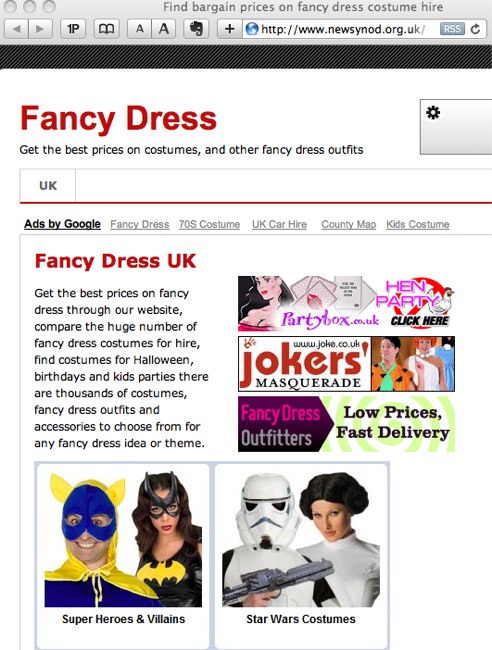
Whilst hunting around for synod-relayed material, I came across a link to the site : newsynod.org.uk.

It appeared to have been set up in preparation for the 2000-2005 synod elections (hence nothing new under the sun, here).

Sadly, the site is no longer active - or at least I didn't think so. It now appears to link to a fancy dress outfitters. Wondering what that is trying to say...


Alastair Cutting

Sunday, 15 August 2010

Election Addresses

UPDATED...

You're thinking of standing for General Synod? Good.

So you have made the first moves, by getting the relevant forms from your Diocesan Office, and have an appropriate proposer and seconder? Not yet? Then you have until 3 September (a little earlier in some dioceses - do check) to get the forms in - it's not too late yet!


Then there is the whole thing of the Election Address or Personal Statement, which all candidates get a chance to make on a side or two of A4. What should you put in it? And what should you leave off?!

(Image borrowed from London, Canada's 2010 election site)

This blog doesn't have definitive answers, and I hope that people will contribute suggestions and observations in comments below. However, here are some starters for 10.

Firstly, remember who your constituency are - for lay members, it is all the lay members of all the deanery synods from your diocese. For clergy, it is those who are incumbents, and those who hold a bishop's license. They are who you are writing this for.

Key things for an address - it should be:
  • personable
  • memorable (there will be a lot of others for electors to read thru!)
  • honest
What about the 'Big Issues' likely to come up in this next quinquennium Synod? The obvious ones are likely to be Women in the Episcopate, the Anglican Covenant; and perhaps gay clergy/bishops and same-sex marriage. So, should candidates declare their hand, their opinions?

In the past candidates sometimes tried to disguise their opinions, or conceal where they stood on some of the key issues likely to come up. Electors would usually just like to know what your opinions are, if they are to vote for you, so making your position clear can only help them decide.

Having said that, it is important to try to do so in a way that will not alienate too many of those who disagree with your perspective. In most dioceses, there aren't enough of any single 'constituency' of opinion to make a partisan approach alone work all the way to being elected.

What else?? Perhaps add something about what your hopes are for the next session of Synod, and maybe how that ties in with things in your home diocese too. What are your hopes for the national Church of England, and it's General Synod? How do you want to see God at work in the church? Are there any particular issues you would like to make part of your focus, things that you are in a particularly strong or unique position to be able to deliver? Make sure people understand that you are not one of those candidates to be left off their voting list by accident.

To photo or not to photo? Unless you are exceptionally well known across the whole diocese, a photo of you helps remind some of those voting who you are. It's not vital, but helps clarify they have the right person in mind! Kissing babies? Careful there, unless they are your own...

Here's hoping for everyone's electioneering to the glory of God (you hadn't forgotten God at the heart of this had you?), and your part within it. Who knows, perhaps if you don't get elected this time, it may help you in becoming more involved in supporting and working with your diocese, deanery and parish in the meantime; as well as establishing a foundation for you in future!

UPDATED
Lesley Fellowes has a list of top ten tips in writing synod election addresses - unfortunately I fear her post is as a result of reading people's election addresses; and it is too late for this time around. The addresses are all published and circulated. They might be useful points for hustings though...

Bishop Alan also has some observations after being at a couple of hustings.

Alastair Cutting

Saturday, 17 July 2010

The General Synod is dead - long live the General Synod

So, at Her Majesty's instruction, the General Synod of 2005-2010 was dissolved on 13 July. A final Communion Service was held, and Synod 'prorogued' by the Archbishop of York.

The General Synod is dead; for which, some may rejoice. But only for as long as it takes to elect a new synod; and the new General Synod takes up it's place in November.

So who will be on it? Apart from the Diocesan bishops, who get places ex-officio, most will be elected over the coming months. The General Synod has a special site set up with details who can stand, both laity and clergy, and what being a member entails, and who the electorate are: http://www.generalsynodelections2010.org/

The site has a link to a video on YouTube:


There is also a downloadable leaflet from the site, with further details:

Official CofE leaflet
Some dioceses have also produced a leaflet of their own. This is the one from Chichester Diocese, and downloadable from their dedicated page too, or directly as a pdf by clicking the image below.

Chichester General Synod Election Leaflet
The contributors to this blog would encourage all who are eligible to consider standing. The timetable for the elections, which are by proportional representation by single transferable vote, is in the table below. Contact your local CofE Diocesan office for local details.

General Synod Election Timetable 2010

1Notification to electors of the election timetable to be followed in the diocese and issue of nomination papersNot later than Tuesday 20th July
2Notification of the validity of any nominationAs soon as any nomination is received
3Closing date for nominationsFriday 3rd September
4Issue of voting papers Friday 17th September
5Closing date for return of voting papers Friday 8th October
6Day of the countMonday 11th, Tuesday 12th, Wednesday 13th, or Thursday 14th October
7Names and addresses of those elected and result sheet to be sent to the diocesan bishop, the Clerk to the Synod, every candidate and to the Election ScrutineerNot later than the fourth working day after the date of the declaration of the result
8The new General Synod is convened by the Queen at a service in Westminster Abbey22nd-24th November


Justin & others & I have enjoyed contributing to the synodical chatter in the ether in the last 5 years, and hope that we helped to add to both your understanding of synodical processes, and to your enjoyment of synod.

If either of us are deemed electable by November, and you are elected too, please consider joining us on the blog, by emailing us at synod@mac.com, and putting 'Add to Synod Blog' in the subject line. If neither of us is elected - please someone take on the role of sharing Synod news in this way.

Thanks, & blessings.

Alastair (no longer Chichester 101)

Thursday, 15 July 2010

So, what happened at Synod?

Actually, there was quite a lot apart from Women Bishops on Synod's agenda (see further down on this) - you can see the full gamut of things covered here on the General Synod pages of the CofE web site.

Photo:Lorne Campbell/Guzelian, 


These included the very diverse:

  • A discussion on the agenda for synod, known as the Business Committee report
  • Reviewing terms of office for Archbishops' Council elected members
  • Accepting the new 'pillar lectionary' to run in parallel with the main lectionary
  • Endorsing the recent update on pensions, and everything that goes with approving the instruments
  • The lively 'Questions' session
  • The presidential address by ++Sentamu
  • The draft budget for the Archbishops' Council for 2011
  • Establishing a new Faith & Order Commission, incorporating aspects of the previous 'Faith & Order Advisory Group', the House of Bishops Theological Group, and the Council for Christian Unity.
  • Links with the Church of Scotland 
  • Reviews of the Constitution
  • A debate considering giving legal status to deaneries to aid mission & ministry
  • Receiving the Church Commissioners Annual Report
  • Receiving an Amending Canon - formally changes one of the Canons of the CofE - see photo
  • Directions relating to Terms of Service for clergy
  • Richard Moy's PMM establishing a 'library' of online resources for Fresh Expressions-style and other services/communities
  • Adjusting the rules of qualifying connection for weddings in parishes within a united benefice
  • Oh, and there was something on Women Bishops

Some of the most exciting and animated debates were the Fresh Expressions resources, and giving legal status to Deaneries debates. Both demonstrated considerable vitality and hope from local church communities across the country.

As to the Women Bishops material: There have been many headlines, there  much spilt virtual ink on many tweets and blogs.

Looking back, so what happened? Well I found the commentaries by two Synod members, the
Bishop of London, from a more conservative background, and the
Bishop of Norwich, from a more liberal background, from here, contrasting and helpful.
Bishop of Ebbsfleet, one of the 'flying bishops' in place for clergy opposed to the ordination of women, leaves his comments here - he is one of those, if reports are to be believed, most likely to take up the Personal Ordinariate offer from the Pope.

Justin Brett, has another helpful post here on the Church Mouse's site, on how the headlines were rather misleading.

So what happens next? When will there be Women Bishops?
Steady on, this is the Church of England. Synod has now asked for the proposals to be sent to the dioceses to discuss, over the next year or so. Then in 2012, if the majority of dioceses are in favour, it returns to General Synod, not for changing, but for ratification.

What hurdles might there be? Well, an all new General Synod is about to be elected in the church's own version of a General Election. This takes place over the Autumn, and will be the subject of the next post on this site.

If the rumours are to be believed, the new House of Laity may not give quite the 2/3 majority support that the legislation requires. Certainly, conservative, catholic, evangelical, liberal, and central groups are all beginning to electioneer, and canvass for potential membership of the new Synod.

If and when the legislation comes to the Synod in about 2012, it needs to pass by at least 2/3 majority in each house. If it gets that, it then has to go to parliament, not for changing, again, but for ratification - or potentially being sent back. The indications if it is fairly clearly for women bishops, without too many limitations on their authority and responsibility, it should receive fair-wind. Then it will need Royal assent, and then the appointment of a woman, before the likelihood of anyone being consecrated as the Church of England's first woman bishop, in potentially in 2014/15. So, the main item on the agenda has a while still to run...

Alastair, Chichester 101

Monday, 12 July 2010

Synod: updates on the blogs

At the start of the quinquennium 5 years ago, getting information out from synod as quickly as possible was much harder, and this blog was one way to try and fulfil that purpose.

In the July 2008 women bishop's debate, Justin was getting the votes on amendments out on this blog within seconds - this was the fastest place with the news.

Twitter has rather over ridden that now, as comments are now streaming constantly
http://twitter.com/#search?q=synod
The live Twitter feed is also available on the panel to the right here>>>

There is even a (not wholly compatible, we'll see what we can do about that) audio feed provided by Premier as well
http://www.premier.org.uk/streaming/synod.asx
Peter Owen & Simon Sarmiento keep us up-to-date with documents and sources and press news on Thinking Anglicans
http://www.thinkinganglicans.org.uk/

So much for the instant, the immediate responses to what is going on in the synod chamber. But how about the slightly more considered 'lay' (as opposed to press/news) commentaries? That is where the blogs can help us. They are all very individual, but help add to the bigger picture. here is a list of some of the ones we know of - let us know of others and we will add them to the list:

Edwin Barnes: http://www.theanglocatholic.com/
Nick Baines: http://nickbaines.wordpress.com/
Mark Beach: http://rugbyrector.blogspot.com/
Justin Brett: http://dodgyliberal.blogspot.com/
Church Times: http://www.churchtimes.co.uk/blog_home.asp?id=50222
Maggie Dawn: http://maggidawn.com/
Lesley Fellows: http://revdlesley.blogspot.com/
Kathryn Fleming: http://goodinparts.blogspot.com/
Jerry Fletcher: http://jeremyfletcher.wordpress.com/
Scott Gunn: http://www.sevenwholedays.org/

Wednesday, 7 July 2010

All Those Amendments...

Justin has posted a very helpful explanation of how and why most of the amendments work, and how they will affect the proposed women bishops legislation on his blog. His theology - by self proclamation - may be both dodgy and liberal; but his insight in to the synod's debating process is insightful and illuminating.