-----------------------------------------------------------------------
As well as the posts on this blog, check out the more frequently updated @GenSyn Twitter stream, and the #Synod stream below right:
-----------------------------------------------------------------------
Showing posts with label bishop. Show all posts

Sunday, 10 July 2011

The Bishop of Copenhagen’s sermon

The  Rt Revd. Peter Skov-Jakobsen, the Lutheran Bishop of Copenhagen, which the Church of England is in communion with through the Porvoo Agreement, preached at York Minster on Sunday 10 July with the General Synod present.
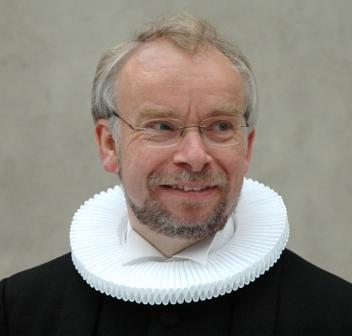


A Dane having worked in England for a few years, he described himself at one point as a foreigner in both places. The sermon is full of some beautiful images and quotes - please do try and read it. And in a wonderful aside from the printed text towards the end of the sermon, recognised Kingston-upon-Hull as the Venice of the North!

Text: Matthew 13, 1-9 & 18-23
It is odd; but as the years pass, I think that these narratives become even more strange – provocative – as if from another world – and yet they liberate a longing to become a person right here and now!
Let me draw you into a story in which Jesus will make us look at the world with different eyes. We have to go back to the time before any dogmatic church teachings had been agreed on, but there were still plenty of barriers between people.
I don’t know what the problem is with us human beings. Apparently we cannot stop protecting ourselves from one another, from finding security in our own thoughts, behind our own borders, behind our economy and our politics, behind our own culture!
And here we meet him again, this man who had such a colossal ability to listen, a man who once talked to a Samaritan – the outsider, the enemy. How dare he! And worse than that, a Samaritan woman! Oh dear. This was the man who, when they dragged before him a woman caught in adultery, told those without sin to cast the first stone - and no one dared. And then he told her to sin no more! He made friends with strangers, tried to make his fellow-Jews to think again, and guided people away from sin. Truly he planted seeds – seeds of reflection, and seeds of action.
The Russian writer, Dostoyevsky, was sometimes very critical of western culture, of our attempt to secure ourselves behind our knowledge, behind our technology, and we could add another word, that Dostoyevsky didn’t know: behind our ‘growth’ – are we planting seeds for growth or merely weeds? He thought that we had lost our feeling for Christ. He claimed that we no longer, as he put it, ’asked the heart for advice’.
Here at the start of the 21st century we should listen to that criticism. There is no doubt that even only 30 years ago many people thought that religion would soon be a thing of the past – we would outgrow it. Like a scorched plant it would wither and die as we moved into a post-secular existence. There are many things on the move at present in the thoughts and lives of modern man. But we must also acknowledge and accept our history – as well as one another’s histories, for then the walls come tumbling down, as we learn to listen and live alongside our neighbours – including our new, strange, neighbours.
Not for one second do I believe that there is any point in going back and finding cover behind the thick walls of dogmatic church teachings. Nor can we further any understanding of faith or the church by hiding behind an anxious defence of the Bible, and outdated view of gender roles or an unrealistic view of freer sexual morals. We must not make faith into a ghetto. We must not withdraw and just sit and talk among ourselves! We must be the seed that falls on fertile ground. not the seed that has no root and lasts only a short time.
Let us start our pilgrimage into the future with the words of the Welsh poet R.S. Thomas:
                          … … Was the pilgrimage
                          I made to come to my own
                          Self, to learn that in times
                          Like these and for one like me
                          God will never be plain and
                          Out there, but dark rather and
                          Inexplicable, as though he were in here?
It is our task to be part of the times and to draw attention to the fact that history has a heart, that there is a fundamental warmth of the heart beneath our existence.
I am sure that the good and dependable Yorkshire farmers are surprised at today’s text. Who on earth would sow seed on stony ground or on land with a thin layer of soil? Surely you only sow where you can harvest! The text is a typical example of the church not always believing that Jesus meant what he said and said what he meant, so to help that later generations they quickly sent out an interpretation to a text which in reality is very clear. There is a distinction between the superficial man, the worried man and the attentive man, - this is the stony ground, the field full of weeds – and the good soil!
Three types of men! Just consider that what this has brought with it is the history of the church! Just see what condemnations there have been in the air ever since! Just look at the hypocrisy has been enacted. We would hear the story much better if we dared to accept that all three types of soil are found within us ourselves: the disinterested mindset, the superficial, worried mindset, and finally the attentive and empathetic mindset.
And yet something has happened in the world. The heavenly, the eternal, the omnipresent qualities are found in language, in music, in painting, in craft, in decisions. They become present, and people’s lives are first and foremost influenced by our belief that God in His generosity gives Himself to all the world. God does not have time to be concerned with the quality of the soil.
There is sowing to be done.
We are not dealing with a God who desperately wants to change the world before he gives all of Himself. God is not waiting for the world to be ready. He is generous. He is not waiting for the new world to come. He is not looking to see whether people have understood. And suddenly it is as if the truth is close at hand, and heaven is present. Christ has plenty of time. He sees the birds of the sky, he sees the children playing, he sees the lilies of the fields, and he even has time to wait for a lost son. He is the Son of Man who meets people where they are, and not where some would have wanted us to be!
He empowers people to break the circles of anger and indignation and revenge so easily understood. The cheerfulness, happiness, and courage which is found in Christ must be found in the quiet and courageous protest. One such protest has stayed with me. The man in question was George Bell who spoke up in the House of Lords during the Second World War against the allied bombardment of the German cities, arguing that no injustice can be equalized by another. This was an important hour in the history of the church, but also of the parliament that we call  ”the mother of parliaments”.
And again, we can all hear the indignation of love in a cruel time when we hear the story of Erik Mørch, the Danish seaman’s pastor in Hull during the Second World War, whose church St. Nicholas, was obliterated on the night between the 8th and 9th of May 1941. The following morning he went up to the smoking ruin and put up a sign with the words of the Danish theologian, Grundtvig, saying: “We are God’s house and church now, built of living stones”. No swearwords,  no curses could express such life.
As the church we have one task: to tell the world that God loves His world magnanimously, and that we are constantly looking for this signature of Christ everywhere. Our faith has not been built for us to withdraw from the world. No, we must break into the world and explain that in the faith there is multiplicity present. The whole universe can be embraced in it – even the gracious gift of doubt is part of this universe.
It is even more important now that enemies and opponents can look one another in the eye and overcome their enmity. The memory of the resurrection is more important than any human enmity.
This is my hope for the world – and for myself.
In this country you love to tell a story about a Danish king who was so unbearably arrogant and foolish that he even believed he could stop the tide by sitting at the water’s edge and commanding the waves to withdraw. We Danes had already suffered from a bad press for many years. We had frightened the life out of women and children, and it was not the act of a gentleman when Thorkild the Tall plundered the cathedral in Canterbury and took the archbishop prisoner. I’m sorry about that.
Since then our empire has grown oh so much smaller, but a sense of humility has still found it difficult to enter Danish hearts. But we are looking to the future! At long last we have joined the Porvoo Communion! But you may have to accept that now and again there is a little girl sitting on the bench in Denmark saying, “But he’s got clothes on!”
As you get to know the Danish Lutheran Church over the coming years, you will encounter a church struggling to take seriously both tradition and contemporary society. Really struggling!
Thank you for your warm and friendly welcome and for the honour it is to preach a sermon on this happy occasion. For 9 years this part of England was my home, and that is why one of the first things I had to do after being elected by the Copenhagen congregations as their bishop was to make a pilgrimage to the place where I learnt to be a pastor: To Hull! Kingston-upon-Hull.
It goes without saying that I lost my heart to this country, its people, its culture, its traditions, and now I carry the yoke of the pain it is to be a stranger in two places – in this country because I am Danish, and in Denmark because I came to know Great Britain and saw that everything can be painted with a much bigger brush.
Deep down, nevertheless, I am happy with this sense of alienation. It gives me a feeling that nothing is simple.
Alienation gives me courage, and I live happily with polyphony, and I love variety.
So even though we believe that Canute was trying to demonstrate the exact opposite – that you cannot turn back the tide – please carry on laughing at us. That is better than praying the ancient prayer: “Merciful God, deliver us from the fury of the Norsemen!”
And maybe you can learn from our humour. History may have taught a proud little people and the rest of the world a humble truth in the words of our poet Piet Hein:
’The noble art of losing face may one day save the human race.’


Alastair Cutting
Chichester 96


Friday, 10 July 2009

When is a Motion not a Motion...?

When it's been amended.

Last time round I described the sequence of a debate through amendments and so forth, in an attempt to unpack a little of the process that we go through in turning a motion on the agenda into a resolution passed by Synod. One particular tactic that I didn't say much about last time - although it's the one I tried to use myself - was the tactic of complete substitution - "Delete all the words after 'This Synod' and add..." Obviously, one reason why someone would put an amendment like this in is because they think that the proposed motion is just completely wrong and ought to say something entirely different, and there is an example of this in the proceedings this session: Philip Giddings (Oxford Diocese, Chair of the Mission and Public Affairs Council, Vice-Chair of the House of Laity) has put in a "Delete all and add..." amendment to the debate on the Review of Constitutions.

However, there is another reason why this sort of amendment turns up, and we have two examples this time round. One is the contingency business, the other is the motion below:

The Revd Dr John Hartley (Bradford) to move on behalf of the Bradford Diocesan Synod:
‘That this Synod request the Archbishops’ Council to formulate proposals for reductions in the numbers of episcopal and senior clergy posts, taking into account reductions for the number of stipendiary clergy since 1979; and submit a report with recommendations to the General Synod within three years.’

Unless there is a very good reason why they shouldn't be debated - and Southwark's motion to rescind the Episcopal Ministry Act of Synod (Resolution C) is an example of this - motions from Diocesan Synods are always debated at General Synod, in the order in which they are received, and unlike Private Member's Motions they do not lapse at the end of each 5 year synodical period. However, this can result in some pretty forthright motions being put forward, and this is one of them. Clearly, a motion expressed in such bald terms would not necessarily be received with open arms by the hierarchy, but at the same time it would not be sensible for the powers that be to try openly to defeat such a motion. So what is the establishment to do? To the rescue comes our old friend "Delete all and add..." The tactic is to replace something potentially dangerous with something very much more anodyne - then everybody can support it, nobody in authority has to speak against it, and nothing much will happen as a result. This is how it is done:

Canon Dr Christina Baxter (Southwell & Nottingham) to move as an amendment:
Leave out all the words after 'That this Synod' and insert:
", welcoming
a) the recent establishment of the new Dioceses Commission;
b) the decision of the House of Bishops to decouple, from January 2001, national support for episcopal ministry from actual episcopal numbers; and
c) the intention of the Archbishops' Council to prepare for the new Synod in November 2010 a progress report on the delivery of changes to the present pattern of dioceses and of episcopal deployment."

In Synodical terms, Christina Baxter is a very major player. She is Chair of the House of Laity, a member of the Archbishops' Council, and involved in a great deal else besides. Obviously, a Bishop could not have put this forward, it really had to be a lay person. The fact that Christina has been chosen to do it gives some indication of how seriously this motion is being taken.

I have to say, I hope the motion goes through unamended - for two reasons. The first is that I don't like this kind of interference. Bradford Diocese wanted a particular motion to be debated, and they should get that debate, not the debate other people think they ought to have. The second reason is that there is something peculiar about a church that has fewer people in the pews, fewer priests, but more people exercising oversight.

You can find more information from Bradford about their motion at here and a response from the Dioceses Commission at here.

Justin (GS 373)

Thursday, 12 February 2009

In Praise of the Tom Wright Sound-Bite

Bishops have a reputation for being delightful, but sometimes perhaps a little dull - one might have the picture of the episcopal gentleman of Synod settling with gravitas (and the aid of a good lunch) into their chairs ready for the afternoon session. Dull, however, is not an adjective that one could apply to Tom Wright. He is an academic theologian of renown, and of course Bishop of Durham. He is also a master of the synodical sound-bite. Here are some gems from today:

"How do we tell which differences make a difference?"

"Lay Presidency in Sydney and Gay Presidency in New Hampshire"

"The very rich are doing for the very rich what they are not doing for the very poor"

"We need an economy that puts the needs of the poor first. We need Jeremiah-type repentence."


Justin
(GS 373)

A jar, an empty cupboard, and kissing the hand of the Queen


Synod spent some time exploring 'Legislative business' - on Suffragan sees and other ecclesiastical offices (appointing some bishops and others...).

Recent changes in how senior CofE appointments are made - and No 10 and the Crown's involvement in them - were being discussed. Apparently, during some vacancies, in effect the Crown gains some rights, only returned to bishops when they make their oaths of allegiance to the monarch - and, we were led to believe, kiss the hand of the Queen.

As the Crown no longer wants to claim the 'jar' during a vacancy, as Pete Hobson put it, the 'empty cupboard' is no longer really needed. Except that, without the legal framework of the cupboard that could otherwise be disposed of, there would be no meeting of the newly appointed bishops with the Supreme Governor of the CofE. Indeed, the whole framework of the established nature of the church might be at risk, apparently. Christina Baxter, who has spoken of disestablishement before, wondered if this was the only reason for keeping this bit of legislation, this empty cupboard.

The bishop of Guildford brought some interesting light to these peculiar proceedings. Indeed just last week he had been at the formal swearing of oaths of two new bishops. During this, the Queen takes the hand of the new bishop, and the 'Clerk of the Closet' holds a copy of the scriptures, which is what the new bishop kisses.

For the Queen to be fully aware of who the new bishops in her church are, and that new bishops have their primary focus on the scriptures - however quaintly demonstrated - both sound good principles to me; even if it is strange to keep an otherwise empty cupboard...

Alastair Cutting GS101

Monday, 7 July 2008

Numbers on voting for Women Bishops - (b) 7July2008

I have noticed an interesting phenomenon around synod. It is the "I'm in favour of Women Bishops, but..." syndrome.

This is a good and bad thing.

It is good, as clearly synod members are talking with one another, hearing and feeling each others' pain, not wanting to quickly put forward their own personal agenda[s] at the expense of others.

For example, in the background material within the Manchester Report, it is interesting to see the voting figures mentioned on pps 35-37. These demonstrate that on all the key votes in this current quinqenium of Synod, the house of Laity has not had a 2/3 majority - though as in these votes only a simple majority was required, and achieved.

The house of bishops also met before Synod at Market Bosworth, and although they came up with a formula for Synod, rumour has it that again only a simple majority and not a 2/3 majority was achieved in bringing forward Monday's propsal.

What is so important with the 2/3 majority. Because final votes on this legislation will need a majority of 2/3 in each House of Synod before it can be passed. Currently it does not seem to have it. That is why it is said that final approval will have to await the next Synod, due to be elected in 2010.

Why is it though, that so many are saying "I'm in favour of Women Bishops, but..." then? Yes, they want protection for collegues who cannot accept it. But the whole point of this process is that there should be protection for those both seeking, and those unable to accept women as bishops. If such protection is afforded,  should they not by now be saying yes??

Alastair Cutting, GS101

Saturday, 5 July 2008

Common Tenure & other legislative business - (c) 5July2008

Synod often has exciting, godly, and even at times media attracting debates. But it also have to deal with dry legislation at times. Saturday afternoon contained mecessary progress on Pensions, Vacancies in Sees (when appoining a new bishop in a diocese), and other Miscellanious Provisions...

And there was Common Tenure again. This was to be the final Final Approval debate on what is properly termed the Draft Ecclesiastical Offices (Terms of Service) Measure (GS 1637B), and Common Tenure is one of the key aspects of this.

In February's Synod, my report on the Common Tenure debate received a number of comments fearful of the future. The debate on Saturday afternoon was the final approval - no time to change any of the content of the Measure.

Prebendary David Houlding made a speech in contributing to the debate, commenting on the loss of freehold. My neighbour sitting in the chamber leaned over and said to me "David Houlding will be one of those who will hold on to his Freehold, rather than switch to Common Tenure when it comes in...".

No sooner had my neighbour said this, before Fr. Houlding said "I expect many of you suspect I will not be willing to hand over my freehold - but you will be wrong. Not only will I be handing in my freehold and coming under Common Tenure, but I will hope to get my letter in by return of post." He received a significant round of applause, as one from a part of the church which is sometimes suspicious of the rescinding of the freehold as part of some central plan to shift the power away from local parochial clergy, who was outspokenly pro Common Tenure.

In my deanery, with over 20 clergy, only some 6 or so have freehold. I am one of those 6, but as part of my concern for the protection provided by Common Tenure to my colleagues, I will be following Fr. Houlding's example, and handing in my freehold.

Alastair, GS101

Women Bishops Part 1

The Bishop of Manchester had a tough job today. Having produced the next report on Women Bishops - chairing a group that was as diverse as the opinions you find in this Synod - he then had to present it to Synod this morning, after we had done a session of Group Work.

A word about Group Work. This is something that happens at every York session - I have only been on Synod since 2005 so I don't know quite how far back it goes, nor what the original intention behind it was, but I have to say I look forward to it. We are split into groups of 15 or so, we have a bishop and an archdeacon or two to keep an eye on us, and we are given something to talk about. There seems to have been a deliberate effort to mix us up as much as possible, and that's actually the reason why I like it - my group has Traditional Catholics, Conservative Evangelicals and every variety of middle-of-the-road Anglican in between. Given that many of us are not shy of expressing an opinion, it can be lively. The previous two sessions were Bible Study, but this one today was specifically about the Manchester Report, and it gave a chance for a genuinely free and frank exchange of views.

Anyway, softened up or not by the Group Work, there we were in the Assembly Hall in York, waiting for the bishop's introduction. I didn't envy him. The report puts forward a number of alternatives, and it is an inevitable consequence of such an approach that in articulating the various ideas in the report, the poor man was going to say something that would annoy just about every one of his audience. So what did he say, and how was it received?

Well - he picked out the bits of the report that he felt were worthy of particular attention, but there were a couple of remarks that might be of interest. The first was his insistence that despite the difficulties, now was the right time to be carrying on the debate. Previous Synod motions had created an atmosphere of uncertainty, and that meant that issues had to be addressed one way or the other. The second was that we should take seriously the 'Single Clause Measure' option, while being quite clear about the consequences. The third was that what we are really talking about when we talk about these various options and their consequences is what sort of Church it is that we want to be.

So then it was open to the floor, and there were a total of (I think) 27 speeches. Anything I tell you about these is of course impressionistic - I can't do shorthand - but there was some interesting stuff. At some point in the debate I wrote 'everyone's being so polite' and indeed they were - but not everybody was cheerful or optimistic. There was a sense that for many people, although their hearts were telling them one thing about inclusiveness, about unity, and about the need to hold everyone together, nevertheless their heads were telling them something else about the implications of some of the paths proposed in the report. Will a Code of Practice be enough for those who conscientiously object? If not, will actual legislated provision be a bridge too far for those who feel that womens' ministry is compromised by what they see as discrimination? Could it be that provisions for those who dissent will actually serve to institutionalise a lack of trust between the various different parties?

And yet... Speaker after speaker made it clear that they felt that the obligation for permanent provisions to be made for those who could not accept womens' ordination continued to be binding upon the Church. It is quite clear - to me at least - that the mood of the Synod was inclined towards compromise of some kind or other. Perhaps the last word ought to go to the Bishop of Manchester. The most telling part of his summing-up was this - that it is far more compelling to ba able to say to someone, "I trust you" than to say to them, "Will you trust me?"

You can find the Bishop of Manchester's Report here

Justin GS373

Taking Note: of Women Bishops - (a) 5July2008

When Synod meets in York, some time is spent in prayer & study in disucssion group. These (29!) groups of about 16 people are a great mix of members of the Synod, bishops, clergy, lay folks, and ecumenical visitors, and basically the same group meet each July Synod. Basically the same group, though on this occasion getting the bishops to chair the meeting meant that more bishops than sometimes came to the group discussions.

The groups discussion on Saturday morning was to prepare for the first block of work around this Synod's Women Bishops debate. This was to be a 'take note' debate - that is, to have an opportunity to have wide-ranging discussions around the report, raise questions over points of clarity etc. It is the later debate, due on Monday, where there are to be real votes on crucial issues of the way forward.

click on the link www.cartoonchurch.com to see the rest of the cartoon

The  Manchester Report suggests a number of ways of moving towards having Women Bishops in the church - and interestingly the 'Manchester Group', though theologically and ecclesiologically diverse - and certainly several are personally strongly against the ordination of women to the episcopate - but yet the group were unanimous in their support that the Church of England should move forward at this time.

The Bishop of Manchester, who chaired the group, finished the debate saying that although sometimes people say to us 'Trust me' - and we sometimes don't; instead if we are the ones that say 'I will trust you', as we explore these issues. In this difficult issue for the church, being able to trust is fundamental to a viable way forward.

Alastair, GS101

Friday, 4 July 2008

Familiar faces

Wifi on trains - what fun! (...or how geeky, get a life...)

It does however allow a quick note whilst travelling up to York. People watching can be fun. Especially when some of the people in view are Giles Fraser, and Gavin Oldham, possibly sitting closer to each other than they may be theologically at other times...

(Correspondent pauses blogging to bow respectfully to the parish just north of Doncaster that took him on as a curate some many years ago.)

Seeing people in surprising places can be fun. Time to 'fess up'. I went to the All Souls post-GAFCon meeting on Tuesday.

And actually press reports that it was exclusively full of members of GAFCon, Reform, Mainstream, and homophobes was clearly wide of the mark, from a number of the faces I recognised there. Many, like me, went to really hear for ourselves what these groups think the future of Anglicanism ought to be. Much of the Jerusalem Declaration I can agree with.

But there are some clauses I am not at all happy with. There are a number of people who have raised concerns - in particular the Archbishop of Canterbury, and the Bishop of Durham.

But at least at that gathering, there were people present with different views wanting to hear each other, and to hear God.

May the same be true of this Synod, and the Lambeth Conference following it.

Alastair, GS101

Thursday, 14 February 2008

The Valentine Bishop

So, Valentine’s Day. Which , if any, of the several bishop’s of old should be identified as the ‘love associated’ bishop, is not completely clear.

Two (otherwise unassociated!) General Synod members with Valentine balloons.

Soon after his election as Bishop of St Albans, as a teenager I remember John Taylor introducing himself at the Greenbelt Festival as ‘the Valentine Bishop’, his Diocese including as it does the Counties of Herts & Beds.

I promised a tenuous Valentine’s/Watford link: it is that John Taylor was also a youngster from St Luke’s in Watford, the church that later fostered my own vocation to the ministry. In fact, the church had sponsored so many over the years, they used to have a board at the back of the church with the names of all those that had gone on to serve God’s church is one way or another. I hope by now they have filled it up and started on another board…

Alastair GS101
Prox It

Monday, 11 February 2008

Dow Bros., and the influence of Watford

At a previous Synod session, I blogged on two brothers in Synod, caught on opposite sides of a great debate: the brothers Hind - John & Tim - one a member of the House of Bishops (Chichester), the other a member of the House of Laity (for Bath & Wells Diocese).


The new pair of brothers at Synod are the brothers Dow - Graham & Andrew. Again one is a member of the HoB (Carlisle) where Bishop Graham has been a member of Synod for a considerable time - but Andrew was welcomed as newly elected member of the House of Clergy (for the Gloucester Diocese).


Andrew was once curate at the church that sponsored my vocation to ordained ministry in my teenage years - St Luke’s, Watford. Indeed whilst he was there he became a national television celebrity - OK it was on Blue Peter, where he demonstrated great skill in creating the sounds of trains using no more or less than his mouth and a standard microphone - but still world famous amongst schoolboys. His skill in reproducing the appropriate railway sounds was incredibly impressive - especially in mimicking electric and diesel trains - and well merited his Blue Peter Badge. However for this particular teenager, having grown up amongst India’s majestic steam trains, it all sounded a bit modern, and not really like ‘proper’ trains at all.


Reminiscing of Watford days, I was reminded again of the Hind Bros., as they too both had Watford connections, both having grown up there, and being Old Fullerians; though they both left the school a while before I ever started there.


Wait for another - tenuous - Watford connection on Thursday’s Valentine blog… I wonder what other Synod members have such filial connections?


Alastair GS101


Update: One of the pairs of brothers told me I was wrong, and that actually there are now 4 pairs of brothers in Synod (the other two pairs being of the families Stephens, and Lloyd) three of the four pairs with a bishop as one of the filial pairs.

Now, how about sisters then? Any brother/sister, or sister/sister pairs at Synod? I expect it will be a while before any of the sisters are members of the House of Bishops though.


Monday, 9 July 2007

Talent & Calling, and the pipeline - (d) 9July2007

I had been in ministry about 15 years before I even heard about any Preferment List (known in some places as the Slope List, after the rather odious and ambitious fictional clergyman in Trollope's Barset Novels).

The CofE, with 40-odd dioceses/diocesan bishops, has a very flat hierarchical structure. OK there are also Archdeacons; Deans of cathedrals; residentiary canons etc. but effectively, numerically (considering the 10,000 members of the CofE clergy) there are not many promotion prospects for most clergy.

There are subtleties of ranks, including: curate, team vicar, incumbent vicar or rector, team rector, rural dean, honorary canon, etc - though most would deny that 'rank' is the appropriate term to use anyway.

There was a time when those with 'preferment' had significantly larger stipends than parochial clergy - but that is really not the case anymore. An archdeacon only gets 1.1 times the stipend of the average priest. [edit: an Adn I know corrects me and says they actually receive a whole 1.3x average stipend, not 1.1 - form that ambition queue right here!] Considering the additional hard work, thin support, and general hassle that archdeacons frequently receive, 'promotion' in the church is not all glory.

There was mention in the Report of a 'pipeline' to try and help spot potential leaders in the church, and to train them for appropriate future senior roles. Of course adding people to lists, or putting them in 'pipelines' all raises expectations; and that can lead to complications - and indeed disappointments: or dis-appointments as one speaker put it.

One of the marvels of the CofE is that time and again there are people of great talent and munificent gifts amongst the ranks of its leaders at parish and national level. At times one persons gifts may best be called and used somewhere else - but gift to the church none the less.

Alastair GS101